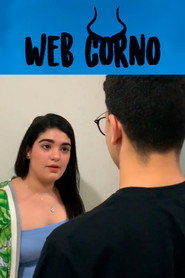
Maria is a shellfisherwoman and midwife in a small village in the Illa de Arousa in 1970s Galicia. After an unexpected event, she is forced to flee to Portugal.
A feature-length documentary portrait of Québécoise painter Johanne Corno, who has lived and worked in New York City for more than 20 years. Ignored by the art intelligentsia in Québec, she settled abroad to escape that creative constraint, and built an enviable international career. Today, she casts a lucid eye on her work and describes the resources she draws on to survive in the jungle of the contemporary art world.
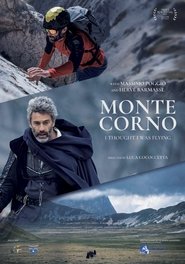
On the 19th of August 1573, Francesco de Marchi climbed the impervious and rocky peak of the Corno Grande, the highest mountain of the Italian Appennin range, accomplishing an epic feat for his time: reaching a peak out of curiosity. He wrote his Chronicle anticipating by 213 years the ascent of Mont Blanc accomplished by Balmat and Paccard on 8 August 1786. 450 years after the feat, the film recounts the climb, narrated by Francesco De Marchi's own words, with spectacular images of the climb among the calcareous rocks of the Corno Grande.
Translate millions of words and phrases for free on SpanishDictionary.com, the world's largest Spanish-English dictionary and translation website. I am practicing using memrise. In this site, the following means: "Are you ready to order?" ¿Están listos para pedir? However, as far as I know, "están" refers to they and I argue that the correct What is the difference between estás and está? Compare and contrast the definitions and English translations of estás and está on SpanishDictionary.com, the world's most accurate Spanish-English reference website. What is the difference between Como estas and Como estás with an accent??? Does it mean something else??? Learn how to pronounce thousands of words in Spanish for free using SpanishDictionary.com's pronunciation videos. Use our phonetic spelling, syllable breakdowns, and native speaker videos to perfect your Spanish pronunciation. It's just a matter of stress. If the stressed syllable is the first one, you don't write the accent. If it's the last one, you do. You know, the rule states that "if the stress is in the last syllable and it ends in vowel, n or s, you must write the accent". Besides, está and esté are forms of the verb estar, whereas esta and este are demonstratives or pronouns. Some examples: Esta mesa ... Conjugate any Spanish or English verb in every tense for free on SpanishDictionary.com, the world's largest Spanish-English dictionary and reference website. En este blog encontré lo que creo es una respuesta bastante acertada a la primera pregunta: Hola, ¿cómo estás? / Hola. ¿Cómo estás? "Hola" es una interjección. Al respecto, el blog mencionado dice: La interjección es una clase de palabra que forma expresiones exclamativas con las que se manifiestan sentimientos, impresiones o reacciones afectivas, se induce a la acción o se apela al ... ¿Cómo Estás? ¿Cómo estás? is an informal phrase you’d use when talking to someone that is the same age as you or younger. It can be used as part of a greeting or to find out how other person is feeling. Cómo Estás As a Greeting ¿Cómo estás? is very frequently used together with ¡Hola! There are two verbs representing English to be: ser and estar. Es and está are conjugated forms of ser and estar, respectively. Precisely, it's the third person singular. Está is also the spelling for second person (tú) in imperative mood (cf ). The difference of these verbs is discussed a lot in every beginner book and in hundreds of tutorials on the Internet; for instance on . There are ...
![[.Pelis.]](https://pelis.flixshore.com/wp-content/uploads/2026/03/camera.png)